
Hawaiʻi County Wanted Releases
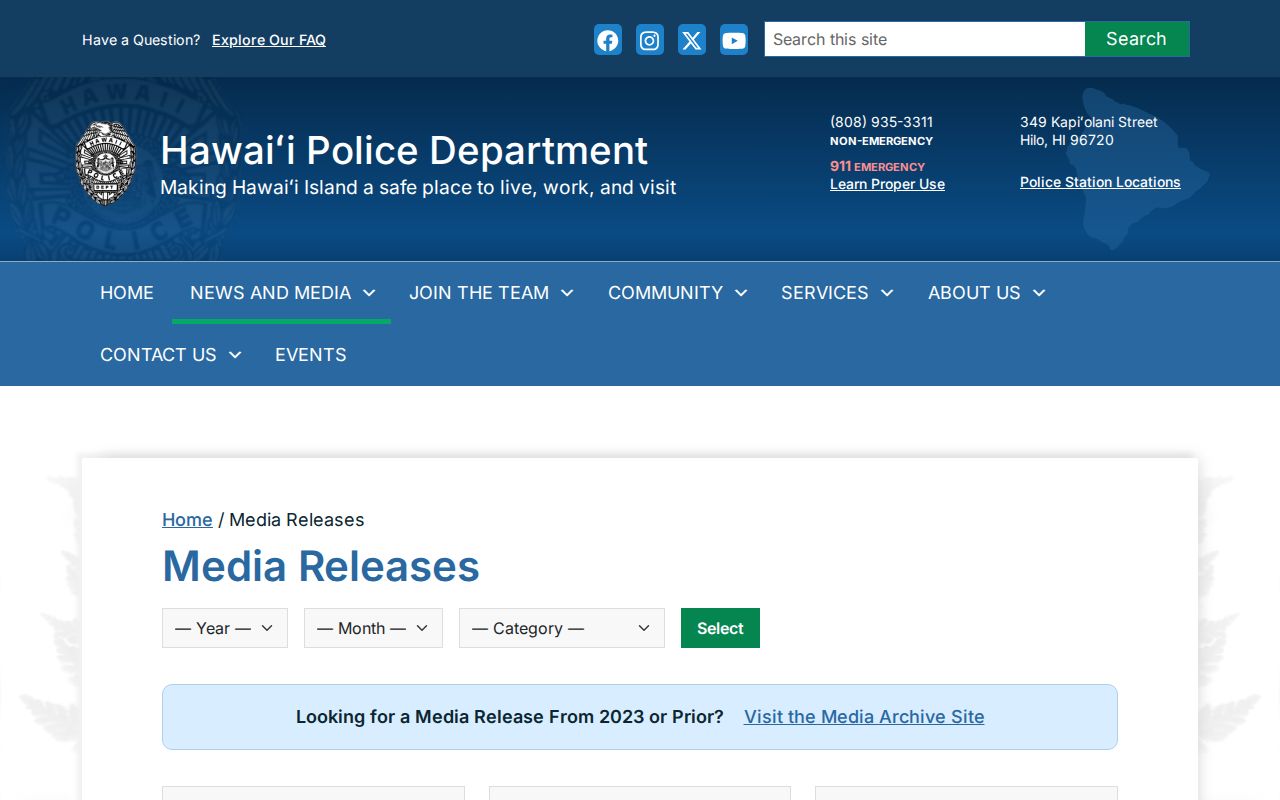
Hawaiʻi County keeps no standing most-wanted list. No sheriff's office here does that work. The countywide agency is HPD, and it publicizes wanted people through its media-release index. Each release is different. Some seek someone on a warrant, others describe an offense, name a neighborhood, or warn that a suspect may be armed. A few add a police photo or a physical description. The index rolls forward constantly. There is no fixed headcount and no set posting schedule, so a release can appear, change, or vanish. Always check the date and wording before trusting a cached page.
The Most Wanted brand still lives on too. Crime Stoppers and the Safe Hawaiʻi program carry it. HPD's own annual report traces it to 2007, when it began as a monthly show on Nā Leo television. Today's Safe Hawaiʻi page still asks the public to help locate people wanted by HPD. But the old monthly format doesn't guarantee today's schedule or content matches it.
The official media-release index is the live source for a wanted notice.
What Hawaiʻi Wanted Listings Show
No two HPD wanted notices look alike. Some are packed with detail. Others hold just a name and a request. What shows up depends on the case and why police published it. A photo, when one appears, is a police-supplied image. It belongs on the source page rather than in any outside gallery.
| Possible field | How to read it |
|---|---|
| Name or description | The person HPD identifies in that dated release. Confirm spelling and identity through the source. |
| Photo or physical details | A selective police image or description. It is not necessarily the same as an HPD booking portrait. |
| Alleged conduct | The conduct or charge described by HPD. It remains an charge until the court resolves it. |
| Warrant or bail basis | The notice may mention a warrant, bail, or court matter. A media release is not warrant confirmation. |
| Area or last-known information | Geographic context supplied by HPD. It is not an instruction to search for or confront someone. |
| Tip instructions | 911, HPD's non-emergency line, or Crime Stoppers depending on urgency and the release wording. |
How to Read a Wanted Release
Go to the original HPD page for anything current. Screenshots and reposts go stale fast. Recognize someone? Pass it to law enforcement rather than investigating on your own. Anyone who believes a notice is wrong should talk with an attorney or the court.
- Open the HPD media-release index and select the individual notice. Record its publication date and the exact safety warning.
- Read the name, alleged conduct, warrant or bail language, and geographic details. Do not treat a similar name or image as proof of identity.
- For immediate danger, call 911. For other information, use the number or Crime Stoppers instructions in the HPD notice.
- To understand a related booking event, use the Hawaiʻi County booking-record path and keep the HPD report separate from the wanted notice.
- To follow the legal result, use the Third Circuit court record or ask the clerk. A release can be changed or removed without becoming a disposition.
Photos stay on HPD's site, and nothing here replaces the agency's own notice. Keep one more thing in mind: a missing media release never proves a warrant or a case doesn't exist.
Hawaiʻi County Warrant Check
Hawaiʻi County has no open name-search tool for warrants. Neither HPD nor the Judiciary offers one. The official eBench Warrant page exists, but access is limited to approved law-enforcement and criminal-justice members. It spans traffic, criminal, and non-Family civil warrants and refreshes several times a day. It is not a public portal.
For the public, the workable route is Third Circuit eCourt Kōkua. Search by name or case number, pick the circuit where offered, and open the docket. The courts flag two cautions themselves. A name match alone doesn't confirm identity. An INACTIVE status may hint at a missed hearing or bench-warrant issue, but that's inference rather than confirmation.
- Start with the person's correct name and any case identifier. Avoid relying on a name alone.
- Read the case summary, docket, and court status. Look for the underlying event instead of treating INACTIVE as a warrant result.
- Call the relevant court legal-document line or consult an attorney for confirmation. Hilo legal documents are (808) 961-7400; Kona legal documents are (808) 322-8750.
- If a state sheriff contact is relevant, use the current DLE Sheriff Division page. The state sheriff is not a countywide public warrant database.
- Address a mistaken or active matter through counsel or the court. Never use a public post to evade or confront law enforcement.
Hawaiʻi Warrant Types and Status
Warrant terms are easy to blur together. A public case result may not state every detail, and the eBench system is not open for public searching. Use this comparison as a vocabulary aid, then confirm the actual matter with the court or counsel.
| Term | Plain meaning here | Safe next step |
|---|---|---|
| Traffic warrant | A warrant type included in the restricted eBench system. | Ask the relevant court or attorney for confirmation. |
| Criminal warrant | A warrant type that may relate to a criminal case or failure to appear. | Read the court docket and contact the court. |
| Non-Family civil warrant | A civil category included by the Judiciary's system description. | Use the issuing court, not a media list. |
| Bench-warrant concern | A possible issue inferred from a case event or status, not proven by INACTIVE alone. | Confirm through the clerk or an attorney. |
| Wanted release | An HPD request for information or notice about a person. | Send a tip. Do not approach or detain. |
Hawaiʻi Crime Stoppers Tips
HPD Crime Stoppers takes tips islandwide. The current page lists (808) 961-8300 and explains the terms: callers may stay anonymous, get a code instead of giving identifying details, avoid caller ID and recording, and possibly earn a reward up to $1,000. The reward isn't guaranteed. Follow whatever instructions the current HPD page gives.
Crime Stoppers
(808) 961-8300
Islandwide tip line. HPD describes anonymous tips, a code, and possible rewards.
Immediate danger
911
Never approach someone named in an HPD notice. If danger is immediate, call emergency services.
Crime Stoppers ties its monthly Safe Hawaiʻi program to the hunt for people wanted by HPD. Those television and media spots are handpicked notices, not a daily booking feed. Someone left off a notice can still have a case. Someone named in one may resolve it in court later.
The Crime Stoppers source states how anonymity and rewards work.
Wanted List versus Warrant Check
A wanted release and a warrant check answer different questions. The release is a curated public notice asking for tips. The warrant check asks whether a specific court or law-enforcement record exists. Most active warrants never surface in a media release, and a release can seek information without enough detail for the public to verify a warrant.
Keep the paths straight. HPD media releases carry the notice and tip instructions. eCourt holds the public case record. A court clerk or attorney confirms what's real. The county booking path shows only whether an arrest-and-charge event appears in the HPD report.
Hawaiʻi State and Federal Custody
A wanted notice answers one question. Custody is a different one, and it takes separate lookups. For state custody or supervision, the Hawaiʻi Department of Corrections and Rehabilitation DCR SAVIN/VINELink route is the tool to use. The Big Island's named community-correctional facility is HCCC, located at 60 Punahele Street in Hilo, reachable at (808) 933-0431. Keep in mind that none of these routes works as a public wanted-photo roster.
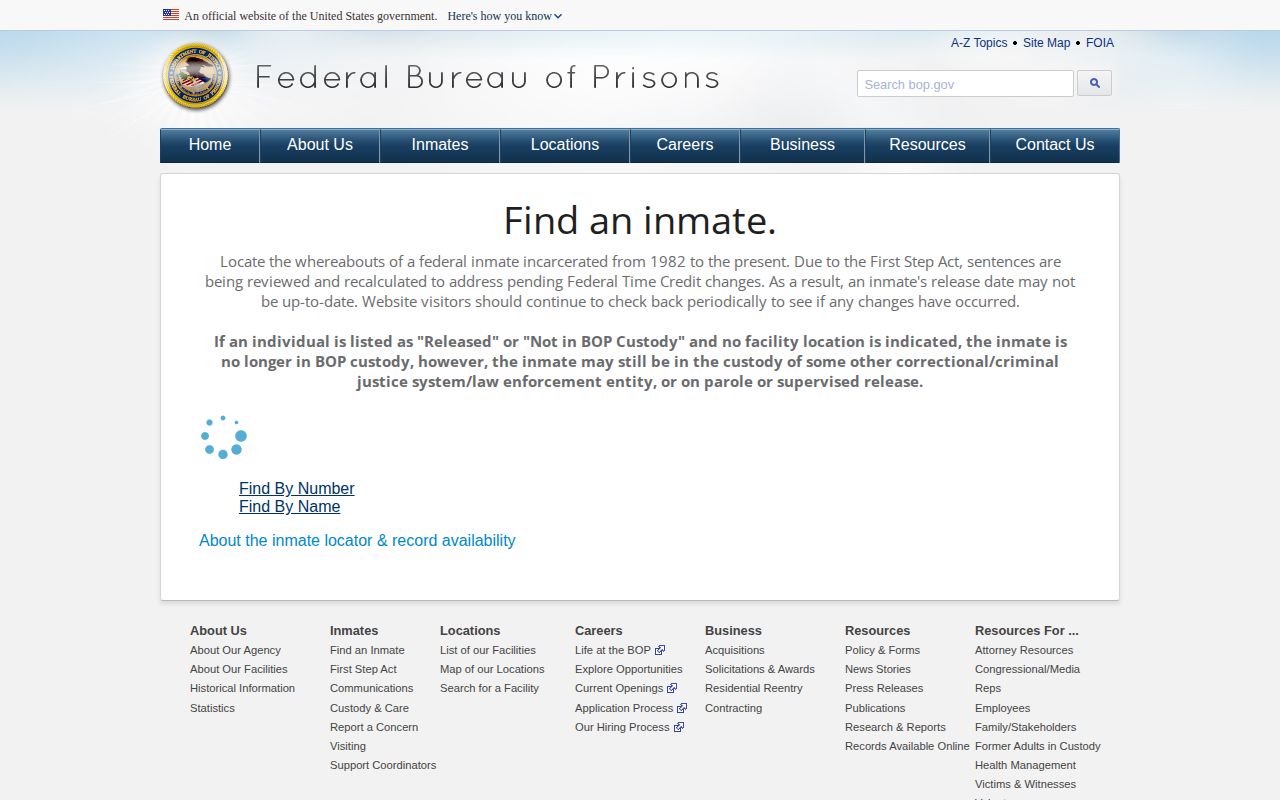
Federal custody runs through its own channel. The Bureau of Prisons locator takes a register number or name fields, though the BOP does not publish a routine booking-photo field. ICE maintains a separate locator. USMS guidance on public prisoner photographs makes no promise of a federal booking image either. Treat any federal result as distinct from an HPD warrant notice, since the two systems do not share records.
The federal locator is a custody check, not a photo-bearing most-wanted list.
Hawaiʻi Wanted Releases Keep Rolling
HPD's wanted channel works differently than a fixed roster. It is a stream of dated media releases, Crime Stoppers bulletins, and Safe Hawaiʻi notices. That stream shifts as new cases come in and old ones close. One release might carry a photo and a warrant description. The next may focus on a safety warning or tip instructions. There is no steady count and no update timer to watch. Read the dated source itself before passing a notice along. Skip the search-engine cache; a cached copy proves nothing about whether a status still holds.
Custody is a separate question from a wanted notice. The Hawaiʻi County booking and court path tracks who is actually held. HPD may later report that a person was located, a warrant cleared, or a case changed. The original post was never meant to serve as a final court result.
Images deserve the same care. A selective HPD notice may include a police-supplied photo even though the county booking PDF stays text-only. That picture alone tells you nothing about where a person sits right now. An HPD cell, HCCC, DCR supervision, and federal custody each have their own official sources.